


Home » Workplace analysis » HUMEN Office
Our bodies are not designed to sit in front of a computer for hours on end. Especially not if it involves adopting an unfavorable posture, which at some point you automatically fall into. The relationship between table height and screen position is often just as problematic as the shape of the chair. A lack of adjustment options for employees of different heights exacerbates symptoms such as the typical hunched back, a hollow back, mouse arm or the so-called “vulture neck” caused by a stretched-out head posture. All these and other symptoms can lead to persistent pain and complex health problems in the long term.
The specialized HUMEN Office® system consisting of hardware and software was developed to analyze the ergonomic aspects of workstations in a classic office setting. This allows important correlations to be recognized and improvements to be made.
HUMEN® Office technology is all about making conditions in the workplace and the resulting health risks visible. Therefore, an easy-to-understand imaging procedure is used in which the seated or standing position of the test person is measured in a matter of seconds.
The innovative method records the angular positions of various joints and can therefore visualize the exact posture of the person in question. The data generated in this way is used to determine the momentary load on the head, upper body, arms and legs and compared with the responsible maximum value for healthy adults. A traffic light system shows the extent to which individual parts of the body are affected at the desk and where the posture deviates in detail from the recommended ergonomic position.


As a HUMEN® Office user, you will receive the complete equipment for your on-site analysis in a handy transport case. In addition to a netbook with pre-installed HUMEN® software, the package also includes a special tripod and a full HD camera with LED light and adapter for the ideal recording position. You can easily carry out the desired measurements yourself with this equipment in your company and receive valuable image material that you can use for further coaching if necessary.
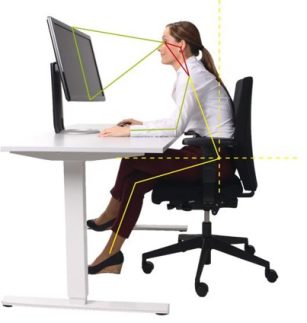

As soon as the technology has been set up, the computer program displays the current working position in an easily comprehensible way so that problem areas become immediately apparent. This is done by clicking on body points in the image using the menu navigation in the HUMEN® Office software. The traffic light colors green, yellow and red support the visualization of the stress on the body. The use of the HUMEN® Office software can be trained by the IGR team before it is used in the company.
Health coach AOK Rheinland-Pfalz/SaarlandWhen it comes to workplace analysis, Humen Office is our secret superhero in the office! The pictorial representation reflects the customer's working posture and the associated incorrect loads. In this way, errors can be detected by the user.
The correct adjustment of the chair, table, monitor, etc. is easy to explain with this visualization and can be easily communicated in a sustainable way.
That inspires me and my customers.

To ensure that the available results lead to a significant improvement and that the work equipment is set correctly, the program provides directly applicable correction instructions. The IGR also offers detailed seating advice. Our experts provide helpful tips on what really matters when it comes to chairs, desks, monitors and ergonomic aids and how employees can consciously change their personal behavior, including their movement habits.
If all the factors involved are taken into account and actively improved, there is a good chance of counteracting muscular tension, blockages and overloaded joints. Keeping your employees with desk jobs healthy is easier than you think.
The ergonomics and office workplace analysis serves to visualize and document workplace conditions and offers the opportunity for an expert assessment of your office workplace conditions.
Problem: Your neck angle is negative and your head is tilted backwards.
Risk areas: Neck and shoulder muscles.
Causes:
Proposed solutions:
Problem: Your upper body angle has a strongly positive value, you are leaning too far forward.
Risk areas: Lumbar spine area, internal organs, oxygen supply.
Causes:
Proposed solutions:
Problem: Your elbow angle is too large, your elbows are too elongated.
Areas at risk: Shoulder and neck muscles, wrists.
Causes:
Proposed solutions:
Note: Other ergonomic parameters can be recorded as part of a workplace measurement. However, these are not evaluated automatically.


The ergonomics and office workplace analysis serves to visualize and document workplace conditions and offers the opportunity for an expert assessment of your office workplace conditions.
Problem: Your neck angle is negative and your head is tilted backwards.
Risk areas: Neck and shoulder muscles.
Causes:
Proposed solutions:
Problem: Your upper body angle has a strongly positive value, you are leaning too far forward.
Risk areas: Lumbar spine area, internal organs, oxygen supply.
Causes:
Proposed solutions:
Assessment: The flexion of your elbows is ideal and is within the ergonomic specifications.
Assessment: The bending of your knees is ideal and within the ergonomic specifications.
The ergonomics and office workplace analysis serves to visualize and document workplace conditions and offers the opportunity for an expert assessment of your office workplace conditions.
Problem: Your neck angle is too large, your head is tilted too far forward.
Areas at risk: Neck and shoulder muscles, headaches.
Causes: You may be sitting too high or too far away from your desk. Your monitor may be positioned too low or too far away. Other reasons could be the resolution of your screen or your visual impairment.
Suggested solutions:
Adjust your sitting position and check the position and setting of your monitor. Have your eyesight checked.
Your upper body angle is strongly positive and you are leaning too far forward.
Areas at risk: Lumbar spine area, internal organs, oxygen supply.
Causes: You may be sitting too high or too far away from the desk. The desk may be too low or the keyboard and monitor may be positioned too far away. Other reasons could be the resolution of your screen or your visual impairment.
Suggested solutions: Adjust your sitting position and the height of your desk and check the position and setting of your monitor. Have your eyesight checked.
Areas at risk: shoulder and neck muscles, wrists.
Causes: You may be sitting too high or too far away from the desk. The desk may be too low or the keyboard positioned too far away.
Suggested solutions: Correct your sitting position and the height of your desk and check the position of your keyboard.
The bending of your knees is ideal and is within the ergonomic specifications.


The ergonomics and office workplace analysis serves to visualize and document workplace conditions and enables an expert assessment of your office workplace conditions.
Your neck angle is too large, your head is tilted too far forward.
Areas at risk: Neck and shoulder muscles, headaches, long-term damage possible.
Causes:
You may be working too high or too far away from your desk. Your monitor may be positioned too far away. Other reasons could be the resolution of your screen or your visual impairment.
Suggested solutions:Correct your working position and check the position and setting of your monitor. Have your eyesight checked.
The tilt of your upper body is ideal and is within the ergonomic specifications.
The bending of your elbows is ideal and is within the ergonomic specifications.
Problem: Your neck angle is too large, your head is tilted too far forward.
Areas at risk: Neck and shoulder muscles, headaches.
Causes: You may be sitting too high or too far away from your desk. Your monitor may be positioned too low or too far away. Other reasons could be the resolution of your screen or your visual impairment.
Suggested solutions: Adjust your sitting position and check the position and setting of your monitor. Have your eyesight checked.
Your upper body angle is strongly negative, you are leaning too far backwards.
Hazard areas: With this sitting position, no direct hazard is to be expected in the area of the upper body, however this sitting position has an effect on your entire working position. The further measurement results must therefore be analyzed.
Your elbow angle is too large, your elbows are too stretched.
Areas at risk: shoulder and neck muscles, wrists.
Causes:You may be sitting too high or too far away from the desk. The desk may be too low or the keyboard positioned too far away.
Suggested solutions: Correct your sitting position and the height of your desk and check the position of your keyboard.
Your knee angle is too small, your knees are bent too much.
Areas at risk: Lower leg area, internal organs, oxygen supply.
Causes: You are sitting too low. Your desk may not allow you to sit in a higher position.
Suggested solutions: Adjust the height of your office chair and desk.


The ergonomics and office workplace analysis serves to visualize and document workplace conditions and enables an expert assessment of your office workplace conditions.
Your neck angle is too large, your head is tilted too far forward.
Areas at risk: Neck and shoulder muscles, headaches.
Causes: You may be sitting too high or too far away from your desk. Your monitor may be positioned too low or too far away. Other reasons could be the resolution of your screen or your visual impairment.
Suggested solutions: Adjust your sitting position and check the position and setting of your monitor. Have your eyesight checked.
Your upper body angle is strongly negative, you are leaning too far backwards.
Hazard areas: With this sitting position, no direct hazard is to be expected in the area of the upper body, however this sitting position has an effect on your entire working position. The further measurement results must therefore be analyzed.
Your elbow angle is too large, your elbows are too stretched.
Areas at risk: shoulder and neck muscles, wrists.
Causes: You may be sitting too high or too far away from the desk. The desk may be too low or the keyboard positioned too far away.
Suggested solutions: Correct your sitting position and the height of your desk and check the position of your keyboard.
The bending of your knees is ideal and is within the ergonomic specifications.
Problem: Your neck angle is too large, your head is tilted too far forward.
Areas at risk: Neck and shoulder muscles, headaches.
Causes: You may be sitting too high or too far away from your desk. Your monitor may be positioned too low or too far away. Other reasons could be the resolution of your screen or your visual impairment.
Suggested solutions: Adjust your sitting position and check the position and setting of your monitor. Have your eyesight checked.
The tilt of your upper body is ideal and is within the ergonomic specifications.
The bending of your elbows is ideal and is within the ergonomic specifications.
Your knee angle is too wide, your knees are too extended.
Areas at risk: Upper and lower leg area.
Causes: You are sitting too high. Your desk may not allow you to sit in a lower position.
Suggested solutions: Adjust your sitting position and the height of your desk or use a footrest.


The ergonomics and office workplace analysis serves to visualize and document workplace conditions and enables an expert assessment of your office workplace conditions.
Your neck angle is too large, your head is tilted too far forward.
Areas at risk: Neck and shoulder muscles, headaches.
Causes: You may be sitting too high or too far away from your desk. Your monitor may be positioned too low or too far away. Other reasons could be the resolution of your screen or your visual impairment.
Suggested solutions: Adjust your sitting position and check the position and setting of your monitor. Have your eyesight checked.
The tilt of your upper body is ideal and is within the ergonomic specifications.
Your elbow angle is too large, your elbows are too stretched.
Areas at risk: shoulder and neck muscles, wrists.
Causes: You may be sitting too high or too far away from the desk. The desk may be too low or the keyboard positioned too far away.
Suggested solutions: Correct your sitting position and the height of your desk and check the position of your keyboard.
The bending of your knees is ideal and is within the ergonomic specifications.
Problem: Your head tilt is ideal and is within the ergonomic specifications.
The tilt of your upper body is ideal and is within the ergonomic specifications.
Your elbow angle is too low, your elbows are bent too much.
Risk areas: Shoulder and neck muscles.
Causes: Your desk is set too high.
Suggested solutions: Adjust the height of your desk.


